
Launching a new digital platform brings an exciting rush of building, designing, and launching. Yet, amidst the rush to go live, legal compliance often takes a back seat. Many new webmasters rush through their structural setup, pasting generic text links in their footers without understanding the contents.
What is the actual difference between terms and conditions and privacy policy requirements? If you mistake one for the other, you expose your business to severe operational vulnerabilities. Let’s dismantle the common compliance myths, explore true digital asset governance, and protect your platform without costly legal overhead.
The Dangerous Assumption of “Two Names, One Document”
Myth 1: They Serve the Identical Legal Protection Function
Many site owners treat these two pages as interchangeable boilerplate. In my experience, this is a critical mistake. One document manages your relationship with your users, while the other manages your relationship with global data laws. Confusing them leaves massive gaps in your platform security layout.
Myth 2: Having Just One Page Satisfies Regulatory Compliance Audits
I have seen countless developers merge these documents or simply create a single page to save time. Assuming one page satisfies global auditors is a fast track to compliance penalties. Statutory bodies view these elements as completely separate disclosures.
Real-World Fallout: What I’ve Observed When Startups Conflate These Agreements
From working with clients over the last decade, I have watched platforms face major financial friction due to poor documentation. In one instance, an indie developer had their ad network account permanently suspended because their privacy clauses were buried inside their usage terms. Regulatory frameworks expect clear, distinct pathways for data processing disclosures.
Breaking Down the True DNA of Web Disclosures
The Functional Anatomy of a Privacy Policy
A privacy policy is a legally mandated statement. It outlines exactly how your platform collects, processes, stores, and transfers personal consumer data. If you use a simple contact form, track metrics, or run basic tracking scripts, this document is compulsory under global legislative frameworks.
The Strategic Role of a Terms and Conditions Agreement
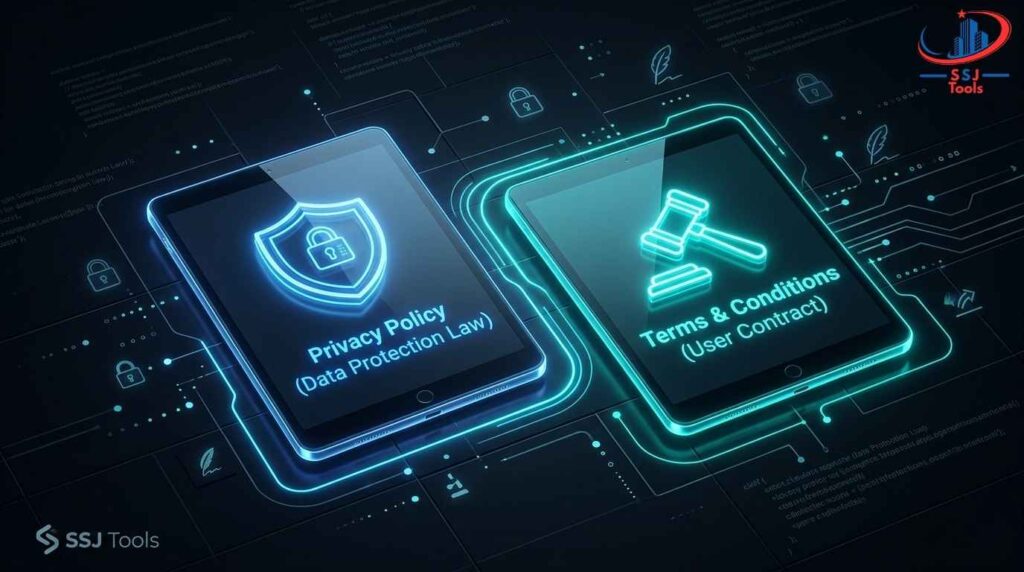
Conversely, a Terms and Conditions (T&C) document functions as a binding corporate contract between your business and its visitors. It establishes your internal ground rules, limits your company’s liability, protects your copyright, and outlines actions that will result in user account termination.
Comparative Blueprint: Governance vs. Global Regulations
- Privacy Policy: Protects the user’s data from corporate exploitation. Driven strictly by legal statutes worldwide.
- Terms & Conditions: Protects the business owner’s asset from user exploitation. Driven by contract and commercial law.
Deciding Rules for Non-Commercial Platforms
Do I Legally Need Terms and Conditions for My Blog If I Monetize Nothing?
A frequent question from creators is: do i legally need terms and conditions for my blog? While a T&C document is not strictly mandated by law for a personal diary site, omitting it is highly risky. Without an explicitly posted usage agreement, you lack solid ground to enforce copyright protection or manage malicious interactions.
Tracking Cookies and Analytics: Where Informational Hubs Get Tripped Up
Even if you do not directly process digital payments, using basic web analytics tools or running display advertisements means you are collecting tracker data. The moment automated tracking begins, global privacy watchdogs expect an easily accessible legal statement on your domain.
Protecting Original Content and Preventing Scraping in Creative Niches
In practice, automated bots regularly scrape text, graphics, and layouts from open blogs. Displaying a clear asset distribution ban within your platform’s rules gives you a firm footing to issue formal takedown notifications against content scrapers.
A Clean Action Plan: Mapping Your Site’s Baseline Protection
Step 1: Auditing Your User Interaction Touchpoints
Examine every dynamic point on your domain. Note down where users enter information—such as user registration forms, email newsletters, comment blocks, or payment checkout screens.
Step 2: Formulating Your Strategy on Data Governance
Determine exactly where that user metadata travels. State whether you process it internally, store it on cloud database hosts, or share it with external analytics networks.
Step 3: Structuring Your User Conduct Boundary Rules
Outline your platform’s boundaries clearly. Define your acceptable usage policies, establish intellectual property rights, and name your preferred regional legal jurisdiction for resolving future disputes.
Common Deployment Mistakes to Avoid Immediate Friction
Copying Competitor Agreements Without Patching Brand Entities
One of the most frequent errors I witness is copying another platform’s text verbatim. This often results in retaining the competitor’s company name, old domain links, or irrelevant local laws within your text, which invalidates your agreement entirely.
Forgetting Contextual Implementation of Effective Dates
Every agreement must prominently display an active version timestamp. Forgetting to establish clear effective dates complicates proving which iteration of your terms a consumer actually agreed to during a past dispute.
Over-Complicating Legalese for a Worldwide Audience
When researching how to write terms and conditions for a website, avoid packing sections with archaic legal jargon. Clear, direct language ensures your terms are easily understood by a global audience and stands up better in modern regulatory audits.
Streamlining Production Without Premium Costs
Leveraging a Free Legal Policy Generator for Websites
You do not need an enterprise budget to establish a baseline of compliance defense. Utilizing a streamlined, free legal policy generator for websites gives startup teams immediate, professional security frameworks without high development costs.
Bypassing Account Sign-ups and Mandatory Email Filters
Many compliance platforms promise zero-cost utilities, only to lock your generated documents behind restrictive payroll walls or marketing lists. The T&C Generator on SSJ Tools offers clean documentation with a strict zero-signup policy.
Why Exporting Plain Text Simplifies Formatting Integration
Our engine provides direct, unformatted plain text files (.txt). This allows you to easily copy the generated text directly into your existing content management system layouts, matching your native typography without importing hidden code scripts.
Compliance FAQ
Can a single blended page serve as both a Terms of Service and a Privacy Policy safely?
No, this approach is highly discouraged. Global privacy regulations require data protection disclosures to be distinctly visible and easily accessible. Combining them dilutes your data governance declarations and can trigger non-compliance flags during automated privacy audits.
What major global regulations mandate a Privacy Policy but ignore a T&C document?
Statutes such as Europe’s GDPR, California’s CCPA/CPRA, and various global data frameworks explicitly penalize platforms that operate without an accessible privacy disclosure. Conversely, a T&C document remains a highly recommended commercial shield rather than a statutory mandate.
How to write terms and conditions for a website that handles community forums or user comments?
Your documentation should feature a dedicated “User Generated Content” section. This clause must state that users grant your business an un-expiring license to host their text, and that your company assumes zero liability for opinions posted by public participants.
Should my site’s footer links be configured with exact boilerplate anchor text?
Yes. Use clear, explicit titles like “Terms and Conditions” and “Privacy Policy” in your footer. Avoid ambiguous phrasing like “Legal Stuff” or “Rules,” as global compliance standards require navigation paths to be highly visible and clear to all users.
How frequently do these digital policies require formal regulatory updates?
Your policies should be reviewed at least once a year, or whenever you add new third-party plugins, integrate new payment processors, or when major international privacy laws are updated.
Secure Your Digital Workspace
Do not leave your platform open to liabilities or content scrapers. Use our free Terms and Conditions Generator at SSJ Tools to build your custom, plain-text policy sheet in seconds—safeguarding your digital growth securely.